What dog-friendly really needs to mean for your stay
A pet symbol tells you a dog may be admitted. The useful question is whether the property and its rules suit the holiday you have in mind.
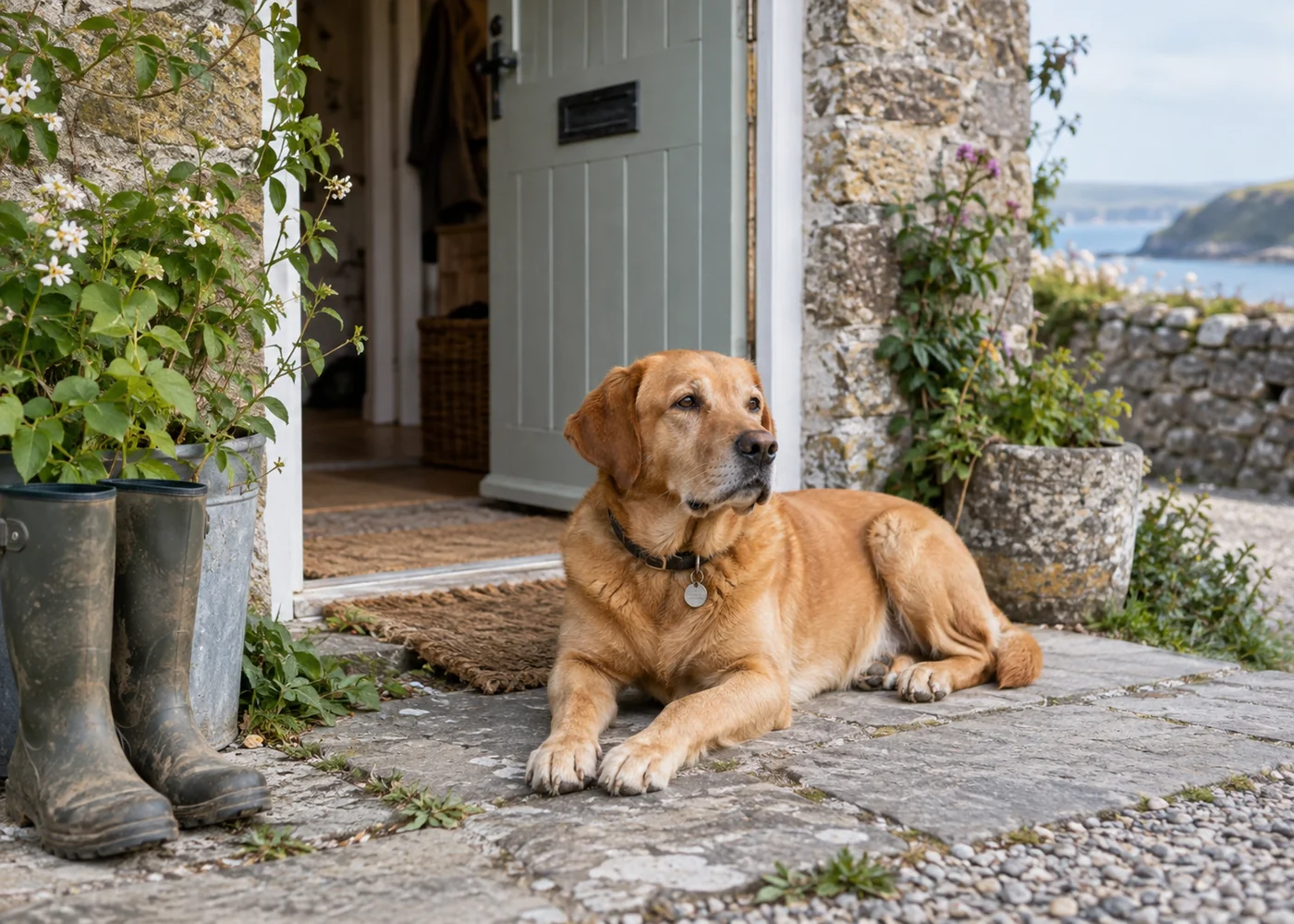
Start with an ordinary day
Imagine the first morning rather than the photograph of a dog beside a fire. Where will your dog go out before breakfast? Can you reach that space without passing through a shared courtyard? Where can a wet lead hang, and is there somewhere sensible for a bed? These small movements happen repeatedly during a stay. A cottage that handles them easily can be more comfortable than a grander house with awkward restrictions.
Write down the routines that would be difficult to change. Perhaps your dog sleeps near you, needs a quiet place away from visitors, or normally eats separately from another dog. None of these details needs a long explanation to a host. A direct question about bedroom access or a separate kitchen is usually more useful than asking whether the property is very dog-friendly. The answer should describe a feature or a rule you can actually use.
Dogs Trust encourages travellers to consider whether the destination and planned activities suit their individual dog. Apply that thought to the whole break. A property may welcome pets while the restaurant you want to visit, the attraction booked for Saturday and the nearest indoor lunch stop do not. Work out where the dog will be during each part of the day before committing to plans that cannot include them.
Separate permission from facilities
Check the number of dogs allowed and whether the charge is per dog, per stay or calculated another way. Read any size restrictions and ask about wording that is unclear. Keep the reply with the booking information, especially if the host has agreed to something beyond the standard listing. A friendly telephone conversation is helpful, but a short written confirmation is easier to refer to when preparing for departure.
Then consider the house itself. Flooring, access to the entrance, stairs and the position of the garden can affect daily life. Photographs often show the most attractive room rather than the route from the parking space. Ask for an additional view if that route matters. There is no need to demand a perfectly pet-proof house; the aim is to understand what you will need to manage yourself and whether that is reasonable for your dog.
Treat a garden description as a starting point. An enclosed space may still have gaps, low sections, shared gates or access used by a gardener. Ask about the full boundary and who enters it. Once you arrive, check it yourself with the dog under control. The host can describe a fence, but cannot know every dog's ability to squeeze through, jump over or dig beneath it.
A useful comparison is to place two shortlisted cottages beside the same ordinary routine. In one, you might carry the lead through a shared passage for every outing; in another, the permitted door opens directly to a private space. Neither description decides the booking by itself. It shows which small task will be repeated throughout the stay, helping you judge whether a lower price or preferred location is worth that particular compromise.
Read the restrictions as a holiday plan
Furniture and bedroom rules are not details to postpone until bedtime. If dogs must remain downstairs, consider whether your dog is comfortable with that arrangement. If they cannot be left alone, plan shopping and meals accordingly. Do not assume that a travel crate overrides a rule against unattended pets. It may be accepted in one property and irrelevant to the condition in another.
Cleaning instructions should be equally clear. Bring your own dog towels, covers where permitted and familiar bedding rather than expecting household linen to serve every purpose. Ask where bagged waste should go. A small cottage can become crowded with bowls, food containers and damp equipment, so check whether a utility corner exists or pack more compactly. The practical details should support the stay without turning every return from a walk into a complicated operation.
Choose the compromise you can live with
Few properties will match every preference. You might accept a smaller sitting room in return for direct garden access, or a slightly longer drive to have a quiet entrance. Distinguish these preferences from arrangements that would make the stay unworkable. If a restriction conflicts with your dog's established routine, another cottage is often a better answer than hoping the rule will be relaxed after arrival.
Keep your final decision grounded in the actual booking description and the host's replies. A supplied biscuit tin or a pet-themed welcome basket can be pleasant, but it does not resolve a steep staircase or an unsuitable sleeping arrangement. The most convincing version of dog-friendly is a stay in which you know where the dog can go, what you need to bring and how an ordinary day will unfold.